
Spirit Airlines on the Brink: Liquidation Risks, JetBlue’s Warning, and What It Means for the U.S. Airline Industry
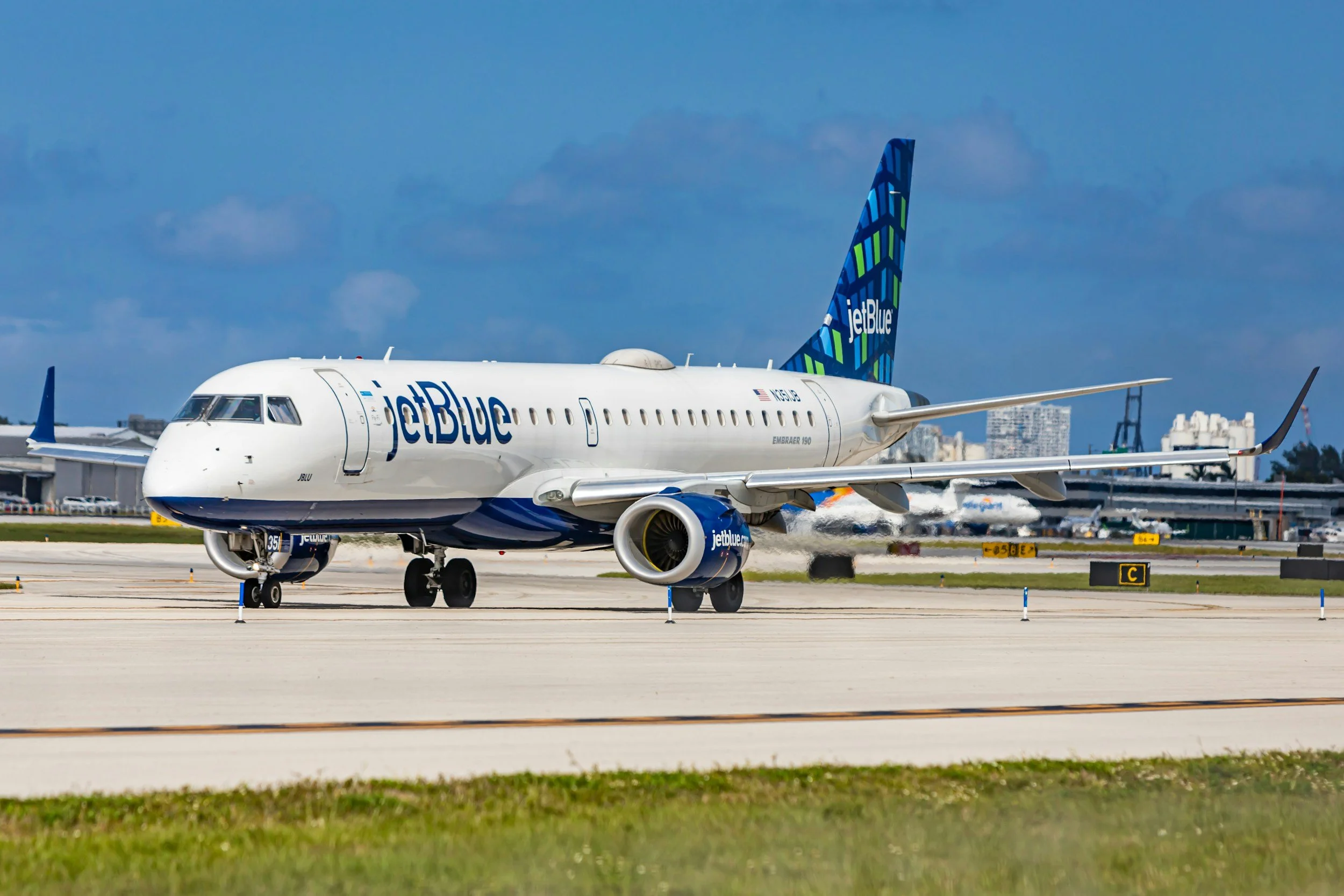
JetBlue operates an all-narrowbody fleet, including transatlantic services
As of mid-April 2026, the ultra-low-cost carrier (ULCC) sector is facing its most severe test in years. Bloomberg and other outlets reported this week that Spirit Airlines could begin liquidation proceedings as early as this week, following a surge in jet fuel prices triggered by geopolitical tensions. Creditors are reportedly exploring Chapter 7 liquidation after Spirit’s second Chapter 11 filing in under a year failed to deliver a sustainable exit path. At the same time, JetBlue founder David Neeleman has publicly warned that his former airline could face Chapter 11 this year, stating bluntly that “no one would buy this company in its current state.”
These developments are not isolated. They represent the latest chapter in a story Boston Warwick has tracked closely since the collapse of the proposed JetBlue-Spirit merger in 2024. In our August 2025 post, Spirit Airlines’ Second Bankruptcy: Filing Details and Frontier Merger Rumors, we highlighted the structural vulnerabilities in the ULCC model and flagged a 75% probability of conversion to Chapter 7 liquidation. The events now unfolding align closely with that analysis. This longer-form update provides full background on both carriers, a clear timeline of events, and forward-looking implications for lessors, passengers, competitors, and the broader aviation ecosystem.
The unfolding distress at Spirit Airlines and JetBlue’s stark Chapter 11 warning highlight structural pressures facing the ULCC and hybrid-LCC segments. For lessors, operators, and investors, this moment creates both immediate risks and strategic opportunities. Boston Warwick is actively supporting clients navigating these shifts through data-driven portfolio strategy, distress advisory, and transaction execution.
Company Backgrounds: From Startup to Sector Heavyweights
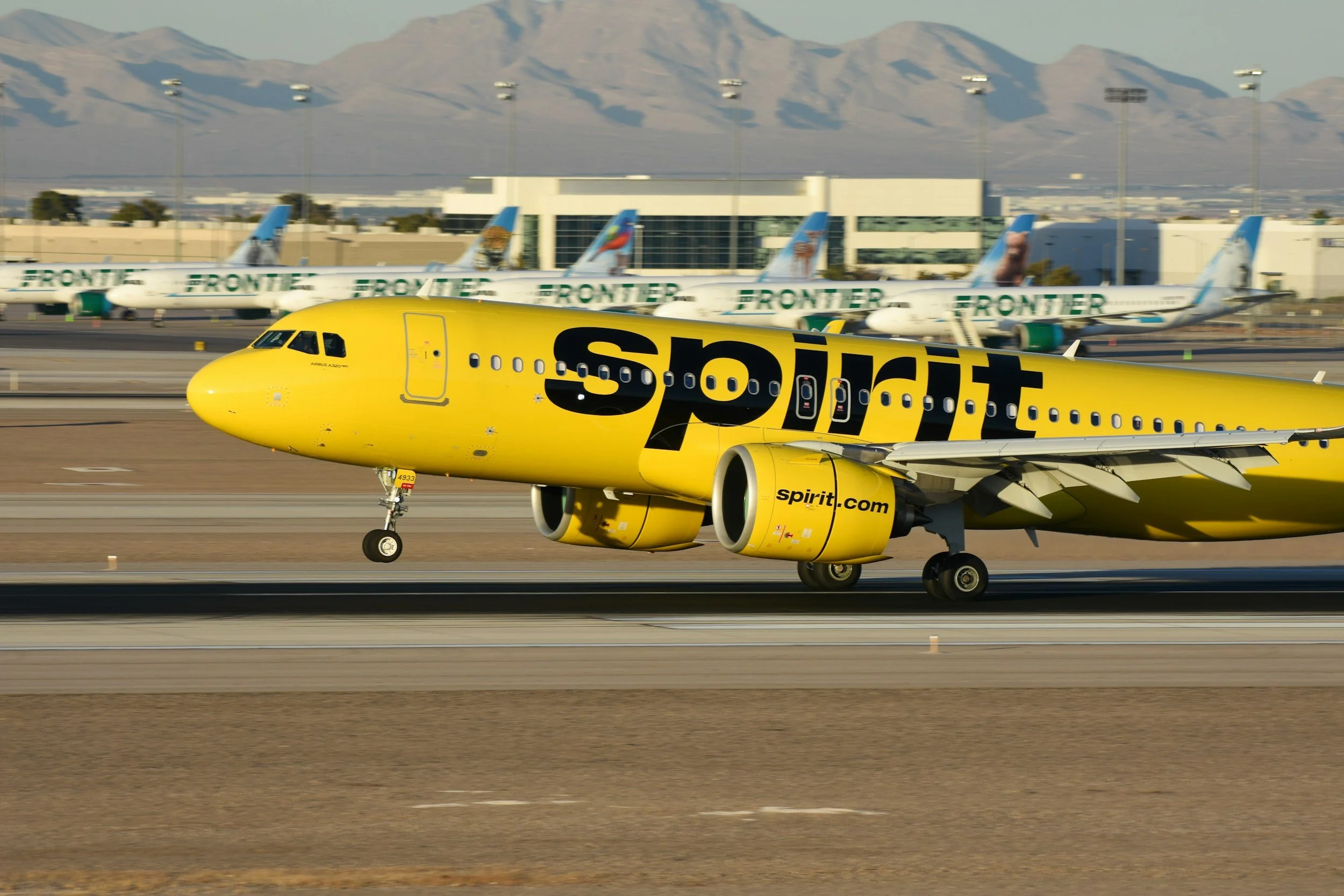
Spirit operates a young all Airbus fleet
Spirit Airlines Founded in 1983 as Charter One Airlines by Ned Homfeld, the carrier began as a Detroit-based tour operator offering charter flights to leisure destinations such as Atlantic City, Las Vegas, and the Bahamas. It rebranded as Spirit Airlines in 1992 and shifted to scheduled low-fare operations. Headquartered in Dania Beach, Florida (Miami metro area), Spirit pioneered the pure ULCC model in the U.S.: ultra-low base fares offset by à-la-carte fees for baggage, seat selection, and even water.
By the mid-2010s, Spirit had grown into North America’s largest ULCC. At its peak pre-pandemic, the fleet exceeded 200 Airbus A320-family aircraft. As of its August 2025 Chapter 11 filing, the fleet stood at approximately 214 aircraft; aggressive restructuring since then has already reduced it to roughly 114 active aircraft, with a stated target of 76–80 by Q3 2026 if it survives. All aircraft are Airbus A320-family narrowbodies. The carrier serves approximately 70 destinations across the U.S., Caribbean, and Latin America.
JetBlue Airways Founded in August 1998 by David Neeleman (who had previously co-founded Morris Air and WestJet), JetBlue launched scheduled operations in February 2000 from New York’s John F. Kennedy International Airport. Originally incorporated as “New Air,” the airline positioned itself as a “premium low-cost” hybrid: low fares combined with free snacks, live satellite TV, and a more passenger-friendly experience than traditional ULCCs. Headquartered in Long Island City, Queens, New York, JetBlue now operates a fleet of approximately 280–290 aircraft, primarily Airbus A220, A320, and A321 models. It serves more than 110 destinations, with a strong presence in the Northeast, Florida, and the Caribbean.
Both carriers are Airbus-centric and target price-sensitive leisure and VFR (visiting friends and relatives) traffic. Their business models have proven highly sensitive to fuel costs, labor inflation, and competitive capacity.
Timeline: How We Got Here
2022–2024: JetBlue agrees to acquire Spirit for $3.8 billion. The deal collapses in early 2024 after the U.S. Department of Justice blocks it on antitrust grounds. Spirit loses its best chance at a capital infusion and strategic scale.
November 2024: Spirit files its first Chapter 11, citing persistent losses and post-COVID debt.
March 2025: Spirit emerges from its first restructuring as a private company with reduced debt.
August 29, 2025: Spirit files again (Chapter 22). In our analysis at the time, we noted the filing included plans to reject leases, sell aircraft, and pursue merger talks (including renewed interest from Frontier). We assessed a high risk of further distress given the ULCC sector’s razor-thin margins.
Late 2025–Early 2026: Spirit secures debtor-in-possession financing, reaches agreements with key lessors (including AerCap), and announces route rationalization. It even launches new Boston routes (daily to Santo Domingo and weekly to Cancun) in February 2026, demonstrating operational resilience despite the overhang.
February 2026: Preliminary deal reached with lenders to exit Chapter 11 by late spring/early summer 2026.
April 2026: Surging jet fuel prices (exacerbated by Middle East tensions) derail the exit plan. Creditors now favor liquidation. Simultaneously, JetBlue’s founder issues his stark bankruptcy warning, citing potential $1.3 billion losses in 2026, debt ballooning toward $9 billion, and $800 million in annual interest.
Our earlier coverage in weekly Aviation Insights posts (e.g., August 11–17 2025 and October 20–26 2025) consistently flagged “substantial doubt” about Spirit’s going-concern status, the risks to aircraft lessors from lease rejections, and the broader consolidation pressure on the ULCC segment post the blocked JetBlue merger.
Charts: Visualising the Scale of the Challenge
1. Spirit Airlines Fleet Reduction (2025–2026) The following interactive bar chart illustrates the dramatic contraction already under way — and the binary outcome now facing the carrier.
2. Comparative Fleet Sizes – Spirit vs JetBlue (Approximate, April 2026) A simple side-by-side view of current scale:
| Carrier | Approx. Fleet Size | Primary Aircraft |
|---|---|---|
| Spirit Airlines | 114 (shrinking) | Airbus A320 family |
| JetBlue Airways | 280–290 | Airbus A220 / A320 / A321 family |
Implications: Consolidation, Fares, and Opportunities
A Spirit liquidation would remove roughly 100+ aircraft and thousands of daily seats from the market. The immediate effect would likely be higher fares on leisure-heavy routes, particularly in Florida, the Caribbean, and select Northeast markets (including the new Boston services we have monitored). Frontier, Allegiant, and remaining ULCCs would capture share, but the overall competitive pressure that has kept U.S. domestic fares among the world’s lowest would diminish.
For aircraft lessors and financiers — core constituencies for Boston Warwick’s deal advisory and analytics work — the situation offers a dual lens. Lease rejections have already occurred; a full liquidation would accelerate aircraft returns, potentially softening values in the short term but creating remarketing opportunities for operators seeking capacity at distressed pricing. We have consistently noted in our weekly insights that lessor exposure to Spirit remains manageable but requires active monitoring.
JetBlue’s warning reinforces a broader truth: even hybrid LCCs with stronger brands and larger fleets are not immune when fuel, interest rates, and capacity discipline move against them. The failed Spirit merger deprived both carriers of the scale many analysts believed was necessary for long-term survival in a consolidating industry.
From Boston Warwick’s perspective, we continue to see value-creation opportunities in aviation distress: strategic advisory on portfolio sales, route acquisitions, and M&A readiness. The current turbulence may accelerate the very consolidation that regulators sought to prevent in 2024 — only this time through insolvency rather than merger.
We will continue to monitor developments daily and provide further updates in our Aviation Insights series. For readers seeking earlier context, see our dedicated analysis: Spirit Airlines’ Second Bankruptcy: Filing Details and Frontier Merger Rumors (30 Aug 2025).
Additional weekly coverage appears in our regular round-ups (e.g., February 9–15 2026 insights and earlier editions).
The U.S. airline industry has always been cyclical. The current chapter is painful, but it may ultimately produce a more rational, sustainable competitive landscape. Boston Warwick remains committed to helping clients navigate these shifts with data-driven strategy and execution support.
— Boston Warwick Aviation Insights Team 17 April 2026