
United Opens the U.S.–Cartagena Market | Honeywell Aerospace Debuts as HONA & Delta Absorbs Spirit's Atlanta Gates | Aviation Insights 29 June–5 July 2026
Boston Warwick drives transformative change for airlines, airports, and aviation stakeholders. Its expert team, with decades of experience, delivers high-impact projects in flight operations, fleet valuations, and M&A, empowering clients with strategic insights.
This week — 29 June to 5 July 2026 — the industry's structural story lines advanced on several fronts at once: United opened a new U.S.–Colombia leisure corridor, Honeywell Aerospace began life as a standalone public company, and Delta moved to entrench its position at the world's busiest airport through a rival's liquidation. Alongside these, a lessor claimed scarce near-term narrowbody delivery slots, two significant airport-infrastructure milestones landed in the United States and India, and controllers in Finland took the next step toward remote, multi-airport operations. Our briefing sets out the developments that matter for network planning, fleet strategy, and capital allocation, and flags the operational pressure building into the peak of the summer.
Airlines
United Launches First U.S. Nonstop Service to Cartagena

Image: A Boeing 737-9, the narrowbody type United will deploy on the Cartagena routes. | Boeing
United Airlines announced on 29 June that it will begin year-round nonstop service from Houston Intercontinental (IAH) and Washington Dulles (IAD) to Cartagena's Rafael Núñez International Airport (CTG) on 17 December, subject to government approval. United will be the first U.S. carrier on either city pair, operating four weekly frequencies from each hub — Tuesdays, Thursdays, Saturdays and Sundays through the winter season — on the Boeing 737. Cartagena becomes United's third Colombian gateway after Bogotá and Medellín, extending a market presence the carrier has held for more than thirty years. Aircraft on the route carry seatback screens with Bluetooth connectivity, larger overhead bins and, in due course, Starlink Wi-Fi for MileagePlus members.
The commercial logic is a familiar hub-to-leisure play executed on narrowbody economics. United offers more Latin America flying than any competitor from both Texas and the Washington area — 57 nonstop regional destinations from Houston and 18 from Dulles — and the new routes fold Cartagena into a network reaching more than seventy U.S. cities through those two hubs. By adding a coastal leisure and visiting-friends-and-relatives destination rather than another capital, United reduces dependence on connections via Bogotá, Medellín or Florida gateways, and sharpens its position against American, Delta, Avianca and Copa in a corridor where demand has outgrown one-stop itineraries. For a market Lonely Planet named a 2026 Best in Travel destination, the timing captures the December-to-March peak from the outset.
Hawaiian Airlines Unveils Its First oneworld Livery
Hawaiian Airlines revealed its first oneworld-marked aircraft on 30 June, applying a special design to an Airbus A330-200 (registration N375HA) to mark its membership of the alliance, which it formally joined earlier in the spring. The livery carries the phrase "Aloha a puni ka honua" — "Aloha all around the world" — in ʻŌlelo Hawaiʻi, while retaining the carrier's Pualani tail and a maile-lei wrap along the fuselage. The unveiling took place in Honolulu at Hawaiian's Charles I. Elliott Maintenance and Cargo Facility, where the airline also donated USD 10,000 each to the ʻIolani Palace and the Polynesian Voyaging Society.
The branding step is a visible marker of a deeper integration underway since Hawaiian came under Alaska Air Group ownership. Alliance membership gives Hawaiian's transpacific and inter-island customers access to global frequent-flyer earning and redemption, lounge reciprocity and coordinated connections — assets that matter disproportionately for a carrier whose long-haul network depends on feed. For the group, aligning Hawaiian's loyalty proposition with a global alliance is a prerequisite for extracting network value from the combination, and the widebody canvas signals that the transpacific fleet is central to that plan.
American to Restore Chicago–Tokyo Narita Nonstop
American Airlines confirmed on 1 July that it will launch daily, year-round nonstop service between Chicago O'Hare (ORD) and Tokyo Narita (NRT) from 27 March 2027, operated with the Boeing 787-9. Through American's Pacific Joint Business with Japan Airlines, the route offers one-stop connectivity onward to additional points across Asia, broadening its reach well beyond the city pair itself.
The announcement re-establishes Chicago as a transpacific origin for American after a period in which its long-haul Asia flying had concentrated elsewhere, and it leans on joint-business economics to underwrite a market where point-to-point demand alone would be marginal. Deploying a 787-9 rather than a larger widebody reflects disciplined gauge selection, matching capacity to a blended business, leisure and connecting profile. Alongside the Tokyo route, American is adding Chicago service to Charlottesville in November and Ontario, California in December, continuing to build out O'Hare depth.
Riyadh Air Extends Its Network to Kuala Lumpur and Europe
Riyadh Air, Saudi Arabia's new state-backed carrier, said on 1 July that it will begin three-weekly service between Riyadh and Kuala Lumpur on 30 July, adding a Southeast Asian anchor to a network that only entered commercial service in June with flights from Riyadh to London Heathrow, Dubai and Cairo. The move sits within a rapid European build-out over the same month, with three-weekly launches to Madrid on 17 July and Manchester on 23 July, all operated by the Boeing 787-9 in a premium-heavy configuration featuring Safran Unity lie-flat business seats.
The pace of expansion is deliberate. Backed by the Public Investment Fund and central to Vision 2030's ambition to turn Riyadh into a connecting hub, the airline is scaling from launch toward a fleet that includes 55 Boeing 737 MAX 9s among a large forward orderbook. For incumbent Gulf carriers, a well-capitalised entrant building simultaneous long-haul and regional reach represents a structural competitive shift rather than a marginal one, and the early network choices — a balance of European business markets and high-volume expatriate corridors — indicate where Riyadh Air intends to compete first.
Delta Rejects Takeoff at JFK After Engine Indication
On 29 June, the crew of Delta flight DL28 from New York JFK to Nice suspended the takeoff roll after receiving an engine-issue indication, following standard protocol. The aircraft, a Boeing 767-400ER, was evaluated on the ground and towed to the gate, where customers deplaned normally; there were no injuries. Cockpit audio referenced a popping sound consistent with a possible compressor event, and a nearby crew reported a brief flame from the number-one engine.
A rejected takeoff of this kind is an unremarkable outcome of trained procedure rather than a safety failure, but it is a reminder of the tighter operating margins carriers face at capacity-constrained hubs during peak summer, when a single runway occupancy event ripples quickly through the schedule.
Mergers, Acquisitions & Finance
Honeywell Aerospace Completes Spin-Off and Debuts as HONA
Honeywell Aerospace began trading on Nasdaq under the ticker HONA on 29 June, completing its separation from Honeywell International — now operating as Honeywell Technologies and still listed as HON. The distribution, in which shareholders received one Honeywell Aerospace share for every two Honeywell shares held at the 15 June record date, marks the final step in splitting the former conglomerate into three independent public companies alongside Honeywell and Solstice Advanced Materials. The business enters the market under chief executive Jim Currier with more than USD 17 billion in 2025 revenue, over 36,000 employees and in excess of 10,000 customers.
As a standalone entity, Honeywell Aerospace is one of the largest publicly traded tier-1 aerospace and defence suppliers, with a global installed base spanning virtually every commercial and defence platform and a "develop once, deploy everywhere" approach to scaling its technologies. For investors, the separation crystallises a pure-play aerospace supplier with clearer capital-allocation priorities and a valuation no longer diluted by unrelated industrial cycles. The wider read-across is the continued unbundling of diversified industrials into focused platforms, a trend that shapes both the supplier landscape airlines negotiate with and the pool of assets available to strategic and financial buyers.
Avolon to Acquire 11 A321neos from Frontier's Orderbook
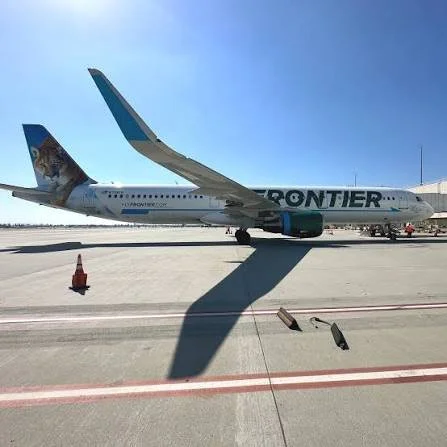
Image: An Airbus A321neo in Frontier Airlines colours. | Frontier Airlines
Dublin-based lessor Avolon is set to acquire eleven Airbus A321neos originally ordered by Frontier Airlines, following unanimous approval from the nine-member board of its parent, Bohai Leasing, on 30 June and disclosed in a filing to the Shenzhen Stock Exchange. The aircraft are valued at approximately USD 1.425 billion on 2018 Airbus catalogue pricing, though the final figure may differ, with deliveries scheduled progressively between November 2026 and June 2027. Frontier retains a substantial order pipeline, still awaiting 142 A321neos following its expanded 2021 commitment.
The transaction is instructive on two counts. First, it underlines how scarce near-term narrowbody delivery positions have become: with manufacturer backlogs stretched, lessors are increasingly securing lift by taking over airline orderbook slots rather than waiting for their own. Second, it illustrates the continuing flow of capital toward scale leasing platforms with the balance-sheet depth to absorb billion-dollar commitments. For carriers, orderbook transfers of this type convert forward capital obligations into sale-and-leaseback flexibility; for the leasing sector, they reinforce the premium attached to delivery certainty.
Delta to Absorb Spirit's Atlanta Leasehold for $12 Million
A filing in Spirit Airlines' bankruptcy case before the Southern District of New York names Delta as the winning bidder for the defunct carrier's leasehold interest at Hartsfield-Jackson Atlanta International — gates C4 and C6, together with ticketing lobby and support space — for a one-time assignment fee of USD 12 million, with a court hearing set for 8 July. Spirit, which ceased operations on 2 May and is liquidating, marketed the interest to ten parties and received competing bids from Delta and one other airline; the lease runs through 30 June 2031, and Spirit would settle roughly USD 721,000 in cure obligations to complete the transfer.
The deal is modest in dollar terms but significant in structure. Delta already accounts for close to 80% of passengers at the world's busiest airport, and gate access at a preferential-use hub with limited room to expand functions as a durable competitive moat rather than mere real estate. That concentration is precisely what draws regulatory attention: FAA Administrator Bryan Bedford has voiced concern about the erosion of low-cost service in the wake of Spirit's collapse, raising the prospect of scrutiny where a dominant incumbent absorbs a failed rival's infrastructure. The episode is a case study in how bankruptcy processes, which prioritise creditor recovery over market structure, can quietly reshape long-run competition.
Airport Developments
Grand Rapids Opens Michigan's First Consolidated Rental Car Facility
Gerald R. Ford International Airport (GRR) opens its USD 156 million consolidated rental car facility (CONRAC) to the public on 8 July, following a ribbon-cutting on 24 June. The five-storey building brings every rental operator under one roof, connected to the terminal by a climate-controlled skywalk and paired with an on-site quick-turnaround facility for fuelling and cleaning — a consolidation the airport estimates will remove some 600,000 rental-vehicle miles annually from local roads.
The CONRAC is the most visible element of the airport's USD 600 million-plus Elevate programme, which has already delivered a Concourse A expansion and includes a planned terminal enhancement and a relocated air traffic control tower still awaiting federal funding. Funded through a mix of federal and state grants, municipal bonds and user fees, the project is calibrated to a facility that handled a record 4.3 million passengers in 2025. For a mid-size U.S. airport, it is a measured example of landside investment aimed at accommodating forecast growth without over-building ahead of demand.
Bhogapuram Airport Nears Operational Handover

Image: The passenger terminal at Alluri Sitarama Raju International Airport, Bhogapuram. | GMR Airports
GMR Group's greenfield Alluri Sitarama Raju International Airport at Bhogapuram, in Andhra Pradesh, is in its final phase of readiness, with commercial operations targeted for around 8 July and a full transfer of civilian traffic from the existing Visakhapatnam airport. Built by GMR Visakhapatnam International Airport Limited for an estimated ₹4,600–5,000 crore, the facility features a 3.8-km runway and a terminal designed to handle six million passengers a year, up to 200 daily aircraft movements and 20,000 tonnes of annual cargo. A validation flight, operated by an Air India A320, landed in January.
The formal inauguration, provisionally slated for 5 July, has slipped on the Prime Minister's schedule and is now expected later in July or in August, with at least one carrier revising its start date to 25 July. The transition is not without friction: the complete closure of the city airport to commercial traffic — a condition of handing airspace to the Navy's INS Dega and of exclusivity commitments to GMR — has drawn objections over the roughly 50-km distance from Visakhapatnam. For network planners and operators, the watch points are the firmness of the operational start date and the readiness of surface-access corridors, both of which will determine how smoothly the handover is executed.
Malaysia Airports Commits RM11 Billion to Five-Year Capital Plan
Malaysia Airports will allocate approximately RM11 billion in capital expenditure over the next five years to expand and modernise infrastructure across its national network. The programme spans the operator's portfolio, anchored by Kuala Lumpur International Airport, and is directed at capacity, resilience and passenger-experience upgrades as regional traffic continues its post-pandemic climb.
The commitment is notable for its scale and timing. Southeast Asia's hub competition is intensifying, with Changi, Bangkok and Jakarta all investing to capture connecting traffic, and Kuala Lumpur's ability to hold share depends on keeping terminal and airfield capacity ahead of demand. A multi-year capital envelope of this size signals confidence in sustained growth and gives airlines and concessionaires greater visibility on the platform they will be operating from through the latter half of the decade.
Industry Innovations & Services
Indra and Fintraffic to Build First Purpose-Built Multi-Airport Remote Tower Centre

Image: A digital remote tower control position. | Indra Group
Indra Group and Fintraffic ANS, Finland's air navigation service provider, have signed a contract to deploy what they describe as the world's first digital remote tower centre purpose-built for multi-airport operations. Located in Vantaa, near Helsinki, the centre will remotely control seven Fintraffic airports — Mariehamn, Turku, Vaasa, Kittilä, Ivalo, Kuusamo and Oulu — with each controller able to manage up to three airports from a single working position. Indra will supply an integrated tower platform bringing traffic display, electronic flight strips and meteorological data onto a single screen, combined with a 4K panoramic visual system with night vision and intelligent traffic overlays, its GAREX voice-over-IP communications, and equipment rated to withstand temperatures as low as −50°C.
The distinction being claimed is precise: remote tower centres already operate at scale — Norway's Avinor centre at Bodø is the largest, controlling a growing roster of airports — but the Finnish facility is positioned as the first designed from the outset for a provider to run multiple airports concurrently from day one. The economic case is the core of the story. For low-traffic regional airfields, centralising control removes the cost of maintaining physical towers and legacy equipment at each site while enabling flexible, demand-matched staffing across a portfolio. As European ANSPs face persistent pressure on cost and controller resourcing, the model points to how digital tower technology moves from pilot deployments to standard operating infrastructure.
Key Watch Items
World Cup Knockout Rounds to Stress U.S. Hub Capacity
The FIFA World Cup knockout stage concentrates demand on U.S. hubs through July, with quarter-finals on 9–11 July at venues near Boston, Los Angeles, Miami and in Kansas City, semi-finals in Dallas and Atlanta on 14–15 July, and the final in the New York metropolitan area. Industry estimates point to several million additional travellers moving around the country for the tournament, with Dallas-Fort Worth and Atlanta among the airports absorbing the largest surges.
Layered onto the peak of the ordinary summer schedule, this is a demand shock arriving precisely where the system has least slack. The watch points for operators are delay propagation from already-tight air traffic control and airport capacity, short-notice slot and ground-handling pressure at the host-city gateways, and elevated premium-cabin and charter demand. Carriers and airports that manage the overlay without cascading disruption will have demonstrated the operational resilience that has been in short supply at U.S. hubs this year.
Farnborough Preview and Widebody Programme Milestones
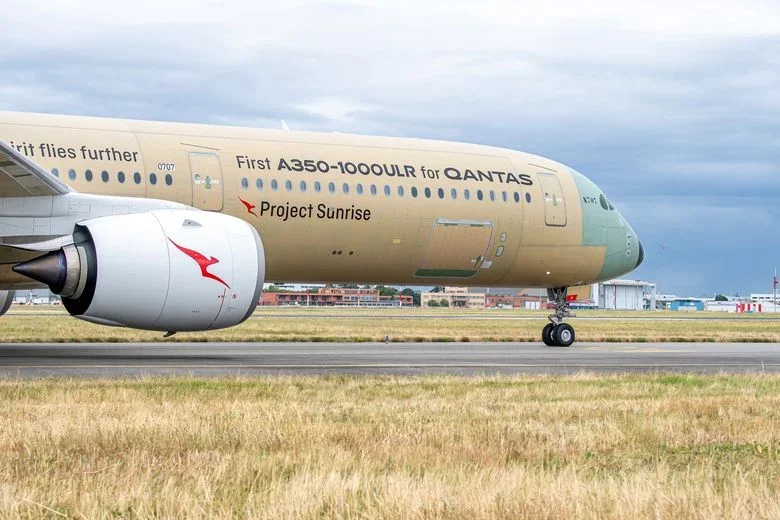
Image: An Airbus A350-1000, the basis for Qantas' Project Sunrise ultra-long-range fleet. | Airbus
The Farnborough International Airshow (20–24 July) will set the tone for the second half of the year on orders and programme progress. Among the headline appearances, the Airbus A350-1000ULR built for Qantas' Project Sunrise — the ultra-long-range variant that will operate nonstop Sydney–London and Sydney–New York — makes its first public showing since entering flight testing in June. On the manufacturing side, Boeing's new North Line in Everett is intended to lift 737 output toward a target of 52 aircraft a month by early 2027.
For fleet planners and financiers, the show is less about the order tally than about the credibility of the ramp behind it. Delivery certainty, not backlog, is the binding constraint across both major manufacturers, and evidence that production rates are rising in a controlled manner is what underpins the value of orderbook positions of the kind changing hands elsewhere in this week's briefing. The progress of ultra-long-haul programmes, meanwhile, will test the economics of the longest routes now moving from concept toward scheduled service.
Stay Ahead with Boston Warwick Weekly Aviation Insights
Receive our in-depth executive briefing every Sunday — covering routes, fleet moves, airport developments, finance, and strategic implications before your competitors.
Subscribe Now →SOURCES
- United Airlines — Cartagena announcement (PR Newswire)
- New Airline Routes, July 2026 — American, Riyadh Air (Business Travel News)
- Hawaiian Airlines oneworld livery (World Airline News)
- Delta DL28 rejected takeoff at JFK (The Travel)
- Honeywell Aerospace spin-off completion (SEC 8-K)
- Avolon to acquire 11 A321neos from Frontier (ePlane AI)
- Delta–Spirit Atlanta leasehold (Atlanta Journal-Constitution)
- Grand Rapids CONRAC opening (Crain's Grand Rapids Business)
- Bhogapuram operational transition (Biz Andhra)
- Malaysia Airports RM11bn capex (Aviation Week)
- Indra–Fintraffic remote tower centre (Indra Group)
- July network changes and programme milestones (Aviation Week)