
MRO Resilience Amid Jet Fuel Surge: Airlines Accelerate Maintenance While Parking Older Jets
The aviation industry is confronting its sharpest jet fuel crisis in more than a decade. Since late February 2026, jet fuel prices have more than doubled amid escalating conflict in the Middle East and severe supply disruptions through the Strait of Hormuz. Airlines are slashing capacity, raising fares and ancillary fees, and — most significantly for the aftermarket — strategically advancing select maintenance programs on their most fuel-efficient aircraft while accelerating the retirement of older, thirstier jets. This operational pivot is already reshaping MRO booking patterns worldwide and testing the resilience of the post-pandemic aftermarket boom. This analysis examines the scale of the shock, the airline responses, the resulting MRO shifts, and the clear implications for investors and operators.
The Scale of the Fuel Price Shock
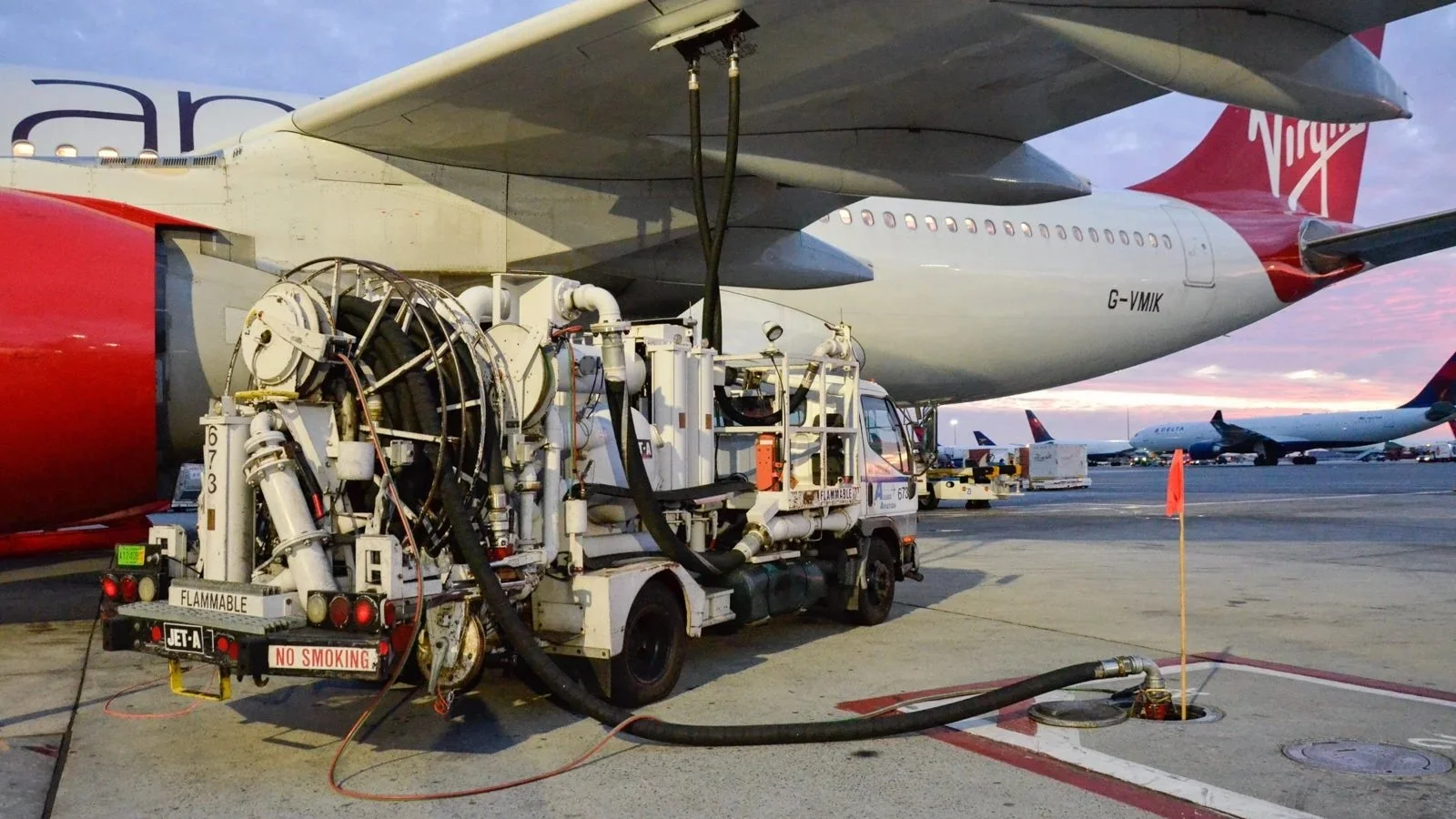
Image: Jet fuel prices have more than doubled since February 2026, forcing carriers to accelerate maintenance on efficient aircraft while retiring older fuel-thirsty jets earlier than planned. | Boston Warwick
U.S. scheduled airlines paid an average of just $2.39 per gallon for jet fuel in February 2026, according to Bureau of Transportation Statistics data. By mid-April, composite spot prices had surged past $4.78 per gallon, with some retail FBO prices exceeding $8.60 per gallon. Fuel, which normally accounts for 25–30% of airline operating costs, has suddenly become the dominant expense line. American Airlines alone warned investors on April 23 that the spike would add more than $4 billion to its 2026 fuel bill if current pricing holds. Delta Air Lines faces an estimated $2 billion incremental hit in the second quarter alone. United Airlines CEO Scott Kirby stated that fares may need to rise 15–20% to offset the increase; the carrier has already implemented five fare increases this year and raised checked-bag fees by $10 on new bookings.
The shock is global. Lufthansa Group announced it would remove 20,000 short-haul flights through October 2026 — equivalent to roughly 40,000 metric tons of jet fuel — and ground 27 CityLine aircraft earlier than planned. Scandinavian Airlines cancelled approximately 1,000 flights in April. Across the industry, carriers are now actively advancing the retirement of pre-2015 narrowbodies (primarily 737-800s and A320ceos) that burn 15–22% more fuel per seat than their MAX and neo replacements. This fleet rationalization is not a distant plan; it is happening now.
Airlines Respond with Capacity Cuts and Early Retirements
The immediate reaction has been aggressive capacity discipline. United Airlines is cutting summer 2026 flight volume by 5%. JetBlue has not ruled out seeking government support, describing the environment as the “biggest headwind since the pandemic.” Several European carriers have consolidated routes onto larger aircraft and fewer frequencies, reducing aircraft utilization by 6–9% at major hubs. Lower utilization directly reduces line-maintenance events and routine shop visits — the bread-and-butter revenue of many MRO providers.
Yet the picture is not uniformly negative for the aftermarket. Airlines are accelerating heavy maintenance (C-checks and D-checks) on two distinct categories of aircraft: (1) the efficient “keep” fleet they intend to fly harder to maximize revenue per available seat mile, and (2) the older aircraft they plan to retire or return early to lessors. In both cases, carriers are pulling scheduled maintenance forward by 3–6 months to align with summer schedule changes and to implement fuel-saving modifications (engine performance restoration, drag-reduction kits, deep engine washes) during the same downtime window.
Early Retirement Acceleration
Lessors report a 25–30% increase in early-return negotiations since March. Many of these returns now include pre-agreed heavy-check packages funded partly by the lessee to facilitate rapid re-marketing. This dynamic is boosting short-term MRO revenues for independent providers while compressing long-term visibility on legacy narrowbody fleets.
The MRO Ripple Effect — Accelerating Maintenance to Survive

Image: Airlines are advancing C-checks and engine performance restoration on their most fuel-efficient aircraft while accelerating retirement of older jets — creating a clear bifurcation in MRO demand. | Boston Warwick
The aftermarket is experiencing a pronounced bifurcation. Line maintenance and routine engine shop visits are declining in line with reduced utilization. At the same time, demand is rising sharply for:
- Condition-based and predictive maintenance programs that identify fuel-inefficiency precursors (compressor fouling, turbine blade creep) weeks earlier than traditional intervals.
- Engine performance restoration and quick-turn swaps on high-utilization efficient aircraft.
- Heavy checks pulled forward to install fuel-saving modifications during already-planned downtime.
- SAF compatibility testing and fuel-system modifications as carriers bring forward sustainable aviation fuel trials.
GE Aerospace highlighted the risk of “lower volume related to shop visits, spare parts and spare engines” in its April 22 earnings call, yet simultaneously noted rising demand for performance-restoration modules. Leading MRO providers such as Lufthansa Technik and MTU Aero Engines report 15–20% increases in bookings for digital-twin-enabled predictive programs. Each 1% improvement in specific fuel consumption now translates directly into millions of dollars saved at current price levels, making previously discretionary work economically urgent.
Segment and Regional Impacts
The fuel shock is not hitting every MRO segment equally. Global MRO demand reached $136 billion in 2025 (up 8% year-over-year). Under the current fuel-stress scenario, 2026 growth is now expected to moderate significantly, with clear winners and losers by segment:
Projected 2026 global MRO demand growth by segment — Base Case vs. Fuel-Shock Scenario. Line maintenance and legacy-engine shop visits face the largest downside; predictive maintenance and performance restoration show resilience.
Innovation and Efficiency Plays in the Aftermarket
Forward-leaning MRO providers are capitalizing on the crisis. Digital twins and real-time sensor analytics now allow targeted interventions during line maintenance rather than waiting for the next heavy check. Engine washes, once a discretionary item, are being advanced by 300–500 flight hours on CFM56 and V2500 powerplants. Several major carriers have brought forward SAF blend trials and related engine compatibility checks by 6–12 months, viewing them as both a hedge against future carbon pricing and a long-term fuel-cost mitigation strategy.
Private equity interest remains robust but is becoming more selective. Platforms with strong predictive-maintenance capabilities and exposure to next-generation engines (GTF, LEAP, XWB) are attracting premium valuations. Pure-play heavy-maintenance providers heavily exposed to legacy narrowbody fleets face near-term volume pressure and are increasingly focused on efficiency-upgrade packages that deliver measurable fuel-burn reductions.
What to Watch Next
The trajectory of jet fuel prices through summer 2026 will determine whether the current MRO booking shift is a temporary re-phasing or the start of a multi-year structural adjustment. Three variables stand out:
- Hormuz and supply dynamics — Any meaningful de-escalation or increased crude supply from non-OPEC sources could moderate prices by $0.80–1.20 per gallon by Q3, potentially allowing some deferred maintenance to return.
- Demand elasticity — Summer leisure travel has proven resilient so far, but a 15–20% effective fare increase may soften load factors in price-sensitive markets, further pressuring utilization and line-maintenance volumes.
- Hedging renaissance — Several U.S. majors have signaled they may reintroduce limited fuel-hedging programs for 2027, which would stabilize cost visibility and potentially slow the pace of aggressive capacity and maintenance cuts.
Jet fuel price trajectory (USD per gallon, composite index). Sharp spike coincides with February 28, 2026 escalation in the Middle East conflict. Source: BTS, S&P Global Platts, IATA Jet Fuel Monitor.
For private equity sponsors and strategic investors, the environment presents both risk and opportunity. Platforms that can deliver measurable fuel-burn reductions through advanced MRO interventions will command premium valuations, while pure-play heavy-maintenance providers heavily exposed to legacy narrowbody fleets face near-term volume pressure. Boston Warwick continues to monitor booking data, airline fleet plans, and fuel forward curves closely; the next 90 days will likely reveal whether the industry’s post-pandemic MRO supercycle has merely paused or entered a more permanent recalibration.
Stay ahead of the crisis
Get our latest analysis delivered straight to your inbox.
Subscribe for Free UpdatesSOURCES
- Bureau of Transportation Statistics (BTS), “U.S. Airlines February 2026 Aviation Fuel Cost,” April 2026
- American Airlines Q1 2026 Earnings Call Transcript & Guidance Update, April 23, 2026
- Delta Air Lines Q1 2026 Earnings Release & Investor Presentation, April 8, 2026
- Reuters, “Price hikes, outlook cuts – What airlines are doing as fuel costs surge,” April 23, 2026
- Oliver Wyman, “Global Fleet and MRO Market Forecast 2026-2036,” February 2026 (updated analysis April 2026)
- GE Aerospace Q1 2026 Earnings Call, April 22, 2026
- Aviation Week Network, “JetBlue: Fuel Crisis Biggest Headwind Since Pandemic,” April 28, 2026
- IATA Jet Fuel Monitor & S&P Global Platts jet fuel price assessments, March–April 2026
- Lufthansa Group Investor Relations, “Capacity Adjustment Announcement,” April 20, 2026
- ACI Europe letter to European Commission on jet fuel supply risk, April 2026
- United Airlines CEO Scott Kirby comments on 15–20% fare requirement, April 2026 earnings materials
© 2026 Boston Warwick. All rights reserved. This analysis is provided for informational purposes and does not constitute investment advice.