
UPDATE - Hormuz Crisis 2026: Global Jet Fuel Rationing Timelines Accelerate – Europe, Asia, Australia, New Zealand & California Brace for Impact
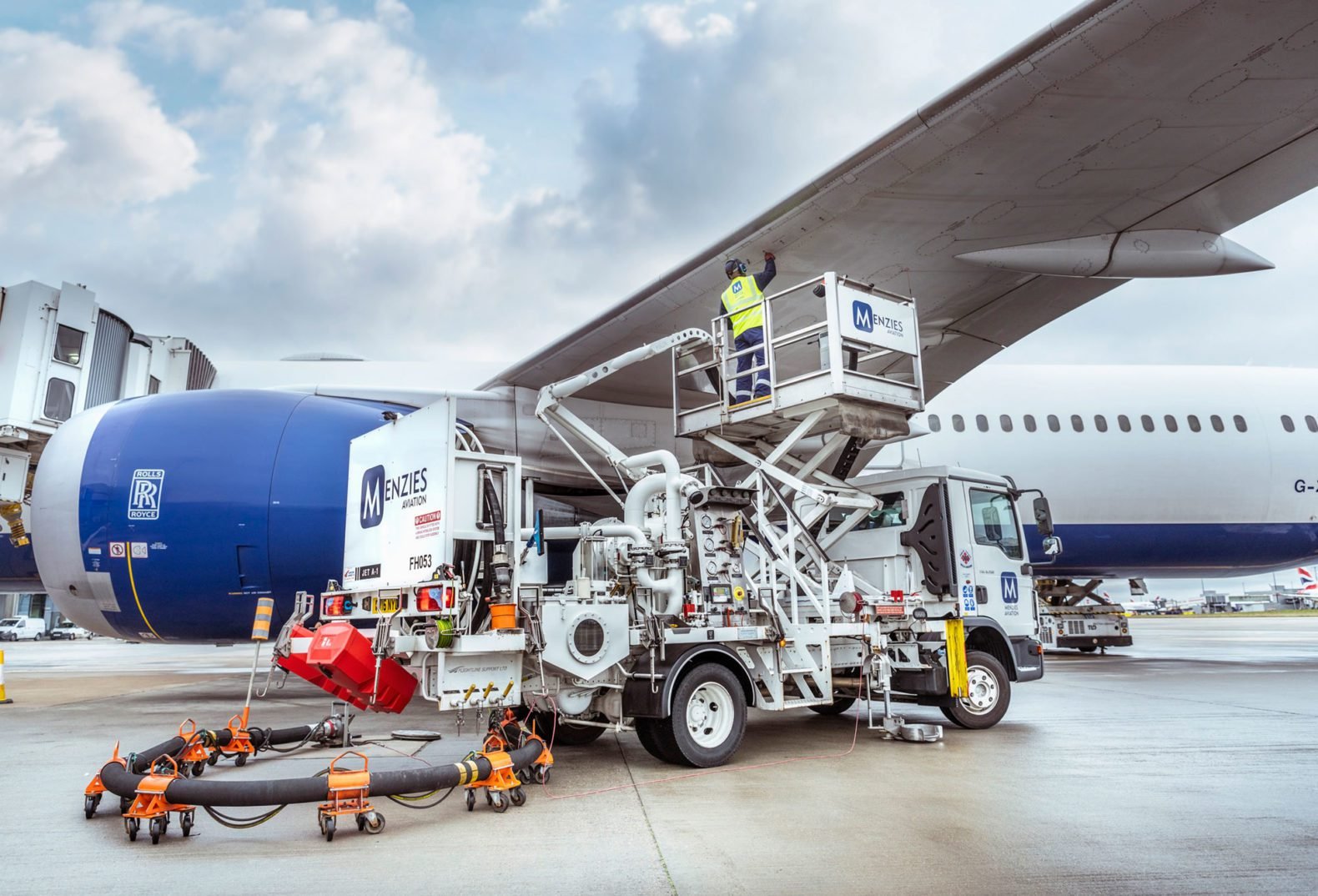
Two weeks ago, Boston Warwick’s 22 March analysis provided a calm, data-driven counterpoint to the widespread media panic surrounding the closure of the Strait of Hormuz. At that time, our modelling highlighted that the International Energy Agency’s (IEA) unprecedented 400-million-barrel emergency release, combined with already elevated in-transit volumes and the realistic potential for demand-side trimming through higher prices and voluntary conservation, would give Europe and other key markets more breathing room than many headline-driven forecasts were suggesting. We emphasised that while the disruption was serious, the immediate physical barrels already in the supply chain meant April would largely remain covered, with real pressure only materialising in May.
A great deal has changed in just 14 days. The Strait of Hormuz remains firmly closed with no immediate prospect of reopening, as diplomatic efforts and the virtual coalition of over 40 nations continue behind the scenes. The very last pre-crisis Gulf-origin jet-fuel tankers are now completing their final discharges (expected arrivals between 9–12 April). Northwest Europe physical jet fuel prices have climbed sharply to €1,750–1,850 per tonne, reflecting both the physical tightness and the significant rerouting and freight costs now embedded in the market. Early operational restrictions have already appeared in Italy, Pakistan and the Philippines, while Australia and New Zealand are feeling the sharp downstream effects of Asian export curbs. California’s long-standing refinery closures and aggressive shift toward renewables have left the state acutely exposed, turning what might have been a manageable global shock into a regionally acute crisis. Northern European countries, particularly Denmark, are showing heightened vulnerability due to their limited domestic refining capacity and heavy reliance on imported product.
Our refreshed independent modelling draws on the latest tanker tracking data from Kpler and Vortexa, real-time ARA and Asian hub inventory reports, official EU and Asian government statements, airline regulatory filings, and detailed commentary from Argus, Rystad Energy, S&P Global and the IEA. April remains largely covered across most markets thanks to the IEA barrels now flowing and strategic stock draws. However, May has now become the pivotal month in which localised crisis declarations, formal rationing measures and significant capacity reductions become highly probable in multiple regions simultaneously. The situation is evolving rapidly, and the window for proactive planning is narrowing.
1. Alternative Global Supply Sources – The Race for Replacement Volumes
With the Strait of Hormuz effectively sealed since late February, the global refining industry, traders and governments have scrambled to identify and mobilise every available barrel of alternative jet fuel and crude feedstock. Replacing the substantial volumes traditionally sourced from the Gulf – which historically accounted for approximately 30–45% of Europe’s jet fuel and a significant share of Asia’s refined product imports – has proven far more challenging than many initially anticipated. The issues are not just volume-related; they include longer voyage times, mismatched product specifications, refinery configuration constraints, and intense competition from other regions that are also prioritising their own domestic needs.
United States: The Gulf Coast remains the single largest source of incremental supply. It holds substantial export capacity and has ramped up shipments sharply since March. US officials and independent analysts have publicly confirmed that the country has “plenty” of jet fuel available for export. However, the practical limitations are significant: voyage times to Europe and Asia stretch to 4–6 weeks, freight rates remain elevated due to the longer hauls, and strong domestic demand plus commitments to Latin America mean the US cannot fully close the estimated 500 thousand barrels per day (kbd) Hormuz-related gap in the short term. Transatlantic flows to Europe have increased meaningfully but still represent only a modest fraction of the lost Gulf volumes.
Venezuela: There is some upside potential if production and refining rates can be lifted further, but current utilisation sits at approximately 35%. Logistical bottlenecks, quality-specification hurdles and the need for additional blending components continue to limit near-term export availability.
West Africa & Others: Nigeria’s Dangote refinery is rapidly emerging as a key new supplier to Europe, with recent cargoes already delivered to the UK. Brazil and Angola are also offering supplementary volumes, but these barrels are being prioritised for regional markets and cannot be redirected at scale without creating shortages elsewhere.
Asia: China and South Korea have tightened or outright suspended refined-product exports in order to safeguard their own domestic stocks. India remains somewhat flexible but is similarly prioritising local requirements amid rising internal demand.
In summary, while alternative supplies from the US Gulf Coast, West Africa, Venezuela, Brazil, and select Asian producers are providing some incremental relief, they fall well short of fully offsetting the lost Gulf production in both volume and speed. Higher freight costs, longer transit times (often 4–8 weeks for the longest routes), and persistent quality specification hurdles mean these replacement barrels come at a significant premium and cannot be scaled quickly enough to prevent tightening in May and June. This reality is forcing both governments and airlines to confront the hard limits of short-term substitution strategies and to prepare seriously for genuine supply rationing in the coming weeks. The crisis has laid bare the fragility of today’s just-in-time global supply chains for critical fuels and has underscored the strategic importance of maintaining adequate domestic refining capacity alongside diversified long-term supply contracts.
Summary Supply Overview – Current vs Potential Capacity To illustrate the scale of the challenge, the chart below shows current supply levels (post-IEA release and initial alternatives) versus the potential additional capacity that could realistically be mobilised from non-Gulf sources in the near term.

Hormuz Crisis 2026: Current vs Potential Supply
Crude Oil & Jet Fuel (as of 5 April 2026) – Non-Gulf sources post-IEA release
© Boston Warwick Ltd 2026 • All Rights Reserved • Independent Energy Market Intelligence
As the chart clearly demonstrates, while current supply has been stabilised at roughly 65–78% of normal levels thanks to emergency measures, the additional potential from alternatives remains modest (15–22%). This gap explains why May is shaping up as the month when rationing discussions will intensify.
2. Government Policies & Rationing Preparedness – From Monitoring to Active Intervention
As the final pre-crisis Gulf jet fuel cargoes finish discharging this week, governments worldwide have moved decisively from passive monitoring to proactive policy intervention. With physical shortages now a near-term prospect rather than a distant risk, authorities are implementing or preparing emergency measures designed to conserve existing stocks, prioritise critical users (such as cargo, military and emergency services), and actively manage demand across the aviation sector. This marks a significant escalation from the situation two weeks ago, with several countries already moving beyond planning stages into actual restrictions and formal contingency declarations.
In the United States, President Trump has taken a characteristically bullish tone, stating: “We have plenty of jet fuel — more than enough. We’re happy to export it to our friends in Europe and Asia who need it.” At the same time, his administration has acknowledged the separate domestic pressures facing California, where refinery closures continue to create local tightness despite the national surplus. In the UK, Prime Minister Keir Starmer has sought to calm public anxiety, urging Britons to “keep booking your summer holidays as normal — there is no need for panic. Our strategic reserves are strong and we are working flat out with international partners to keep flights moving.” Germany’s government has echoed this measured reassurance, with the Chancellor’s office confirming it is “stress-testing every element of our supply chain” while emphasising that “no one should cancel travel plans at this stage.” Australia’s Transport Minister has similarly appealed for calm, noting that the country is “aggressively sourcing alternative cargoes from the US Gulf” while monitoring its 30-day reserve buffer “very closely.”
 Europe (EU-wide)
 Italy
Italy
 UK, Germany, France, Spain
 Northern Europe
 Pakistan
 Philippines
 Australia
 New Zealand
 Japan
Japan
In conclusion, the rapid shift to active policy intervention across continents demonstrates that governments now fully recognise the crisis as a genuine threat to aviation connectivity, economic activity and national security. The measures being prepared or already enacted will help stretch existing stocks, but they also send a clear signal that the era of abundant, low-cost jet fuel is temporarily over. Coordinated international action will be essential if the disruption extends into the summer peak-travel season.
3. Airline & Industry Commentator Reactions – From Reassurance to Concrete Contingency Planning
Airlines are no longer waiting for government direction – they are moving swiftly to implement contingency plans, capacity reductions and fare adjustments. The tone across the industry has shifted decisively from initial reassurance to explicit warnings about May–June disruption, with carriers in every region now openly discussing grounded aircraft, route cancellations and significant surcharges to offset rising costs.


















IATA, Airlines for Europe, Argus Media, Rystad Energy, Shell CEO Wael Sawan and IEA’s Fatih Birol have all described jet fuel and diesel as “the first and biggest problem” for Europe and Asia, with ripple effects now moving globally.
The consensus across the industry is clear: summer peak travel is at clear risk, with higher fares, surcharges and selective cancellations now inevitable. The industry is shifting rapidly from traditional fuel hedging to active capacity management and cost pass-through strategies. Winners will be those carriers with diversified supply contracts and agile networks; losers will face significant revenue erosion and customer dissatisfaction. This phase of the crisis is no longer theoretical – it is already translating into real operational decisions that will shape the travel landscape for the remainder of 2026.
4. Updated Jet Fuel Rationing Timelines – Country-by-Country (as of 5 April 2026)
Boston Warwick’s conservative model now covers 19 key markets and regions, ranging from the most exposed European hubs to key Asian and Pacific markets. The projections are built on the latest available data, including current stock draw-down rates, confirmed IEA emergency release flows, the complete cessation of Gulf-origin cargoes, and a cautious allowance for price-driven or mandated demand trimming of 5–10%.
The dates shown represent the most likely week in which national governments are expected to declare a local crisis and begin formal rationing or airport-level allocation measures. The “Expected Initial Capacity Cut (%)” column reflects our estimated first-round impact on airline operations once those restrictions are introduced. All figures remain deliberately conservative and will be updated daily as new tanker tracking, inventory and policy data become available.
Modelling notes: Timelines assume sustained IEA flows and moderate demand reduction. Stronger global demand management or an early reopening of the Strait could push timelines back by 2–4 weeks. California, Pakistan, the Philippines and New Zealand timelines are accelerated by domestic and policy-specific factors.
Projected Rationing Timelines & Capacity Impacts
 Germany
 France
 Netherlands
 Spain
Spain
 Norway
 Sweden
 Finland
 Belgium
 California (USA)
 India
India
 South Korea
Modelling notes: Timelines assume sustained IEA flows and 5–10% demand reduction. Stronger global demand management or early Strait reopening could extend buffers by 2–4 weeks. California, Pakistan, Philippines and New Zealand timelines are accelerated by domestic/policy factors.
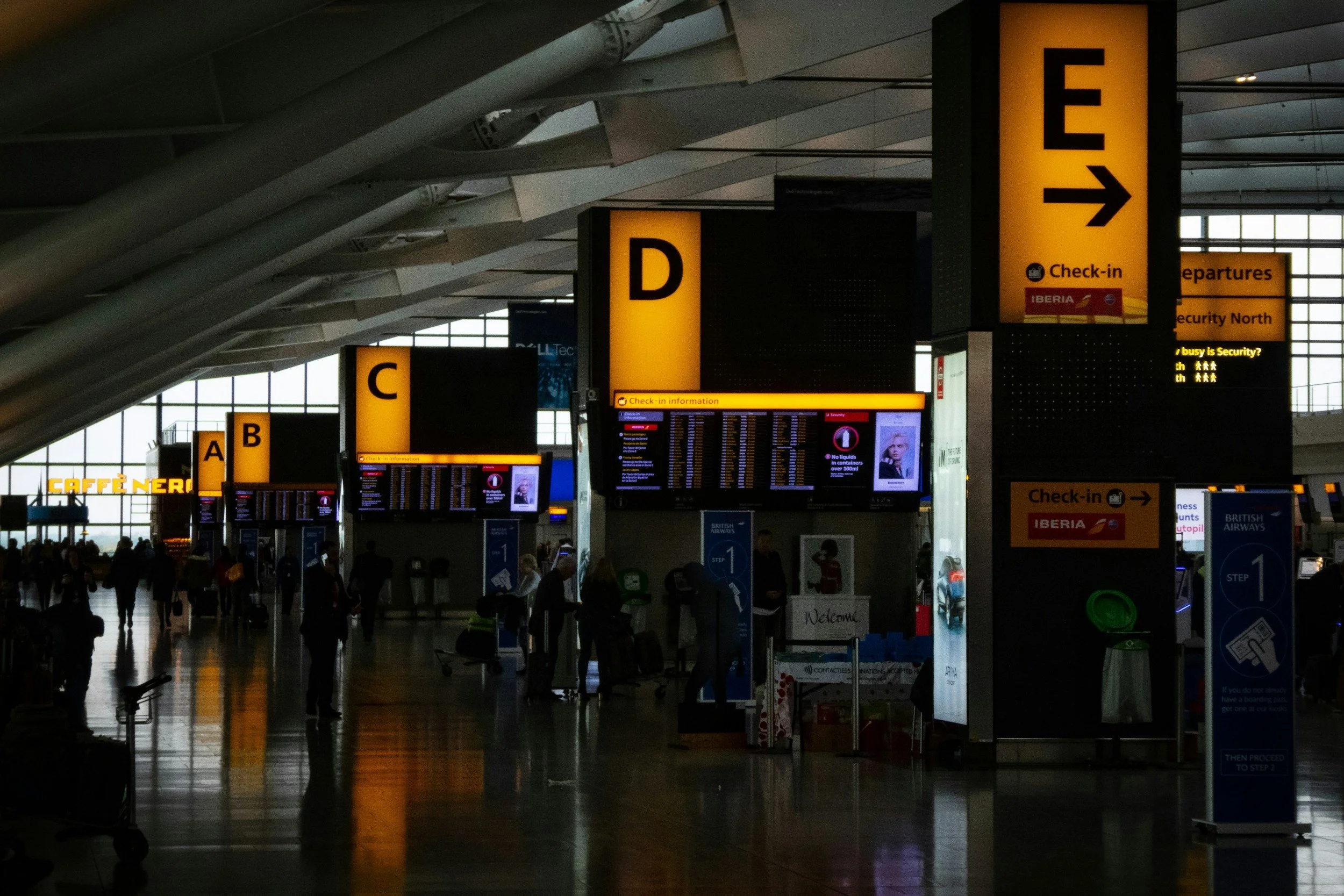
UK Exposure
London Heathrow is one of the worlds critical air-hubs. The UK remains especially exposed although the government has called for calm and for travel bookings to continue as normal.
5. Regional Spotlights – Where Policy Meets Vulnerability
While the Hormuz crisis is a global event, its impact is highly uneven. Certain markets are being hit far harder and earlier than others because of pre-existing structural weaknesses. The following regional spotlights illustrate how long-term policy choices, infrastructure decisions and geographic realities are now colliding with the sudden loss of Gulf supply.
California remains the clearest textbook case of policy-driven vulnerability colliding with a global shock. Over the past decade the state has pursued one of the most aggressive decarbonisation agendas in the world, resulting in multiple refinery conversions to renewable fuels and the planned closure of key facilities. The impending shutdown of Valero’s Benicia refinery (spring 2026) and the earlier idling of portions of Phillips 66’s Los Angeles complex have slashed in-state jet-fuel production capacity by an estimated 17–20%. As a direct consequence, California now imports roughly 40% of its jet fuel, much of it from Asian refineries that are themselves under pressure from the Hormuz disruption. Chevron, the state’s largest refiner, has issued repeated public warnings of imminent shortages at San Francisco (SFO) and Los Angeles (LAX) airports and has urged Governor Newsom’s administration to declare an immediate “energy emergency” and grant temporary regulatory relief on certain climate rules. Military bases in the state are also reported to be at risk, highlighting the national-security dimension of the shortfall.
In Asia, Pakistan and the Philippines have become the most visible examples of acute exposure. Pakistan’s Airports Authority moved early with a NOTAM directing foreign carriers to uplift minimum fuel locally and source as much as possible from overseas; this has already forced several international airlines to reroute or cancel services. The Philippines went further: President Marcos formally declared a national energy emergency, warning that grounding commercial aircraft was a “distinct possibility.” Philippine carriers have been instructed to source fuel abroad wherever feasible, and several overseas airports have begun refusing refuelling requests for PAL and Cebu Pacific flights. Flight cancellations and major schedule reductions are already in effect through October.
Further down the Asian supply chain, Australia and New Zealand find themselves in a particularly precarious position. Both countries have become almost entirely dependent on imported jet fuel following the closure of New Zealand’s Marsden Point refinery in 2022. With traditional Asian suppliers (China, Singapore, South Korea) now prioritising their domestic markets, Canberra and Wellington are actively courting cargoes from the US Gulf Coast. Australia is monitoring its 30-day strategic reserve buffer with increasing concern, while Air New Zealand has already warned passengers and corporate clients of potential capacity adjustments and higher fares.
In Northern Europe, Denmark stands out as particularly exposed. The country has minimal domestic refining capacity and relies heavily on imports through the ARA hub. Industry analysts at Argus have flagged Denmark as facing some of the tightest stock-cover ratios in the EU. Norway, Sweden and Finland are therefore accelerating discussions on enhanced Nordic cooperation, including shared strategic reserves and joint procurement tenders, to mitigate the risk of localised shortages.
Japan’s situation is compounded by domestic factors. Japanese refiners have been running at reduced rates in response to persistently high crude costs and weak margins, leading to steadily declining jet-fuel stocks. The government is now working closely with ANA and JAL on demand-management strategies and is exploring emergency diversification of imports from the United States and any feasible rerouted Middle East volumes.
In conclusion, these regional spotlights demonstrate that no market is immune. The Hormuz crisis is ruthlessly exposing pre-existing weaknesses — whether caused by aggressive refinery closures and decarbonisation policies (California), heavy import dependence after domestic refinery shutdowns (Australia/New Zealand), low stock cover and limited refining (Northern Europe), or the combination of domestic run cuts and global supply tightness (Japan). The result is forcing governments and airlines worldwide to undertake a rapid and painful reassessment of long-term energy security strategies, the pace of the energy transition, and the strategic value of maintaining adequate domestic refining and storage capacity.
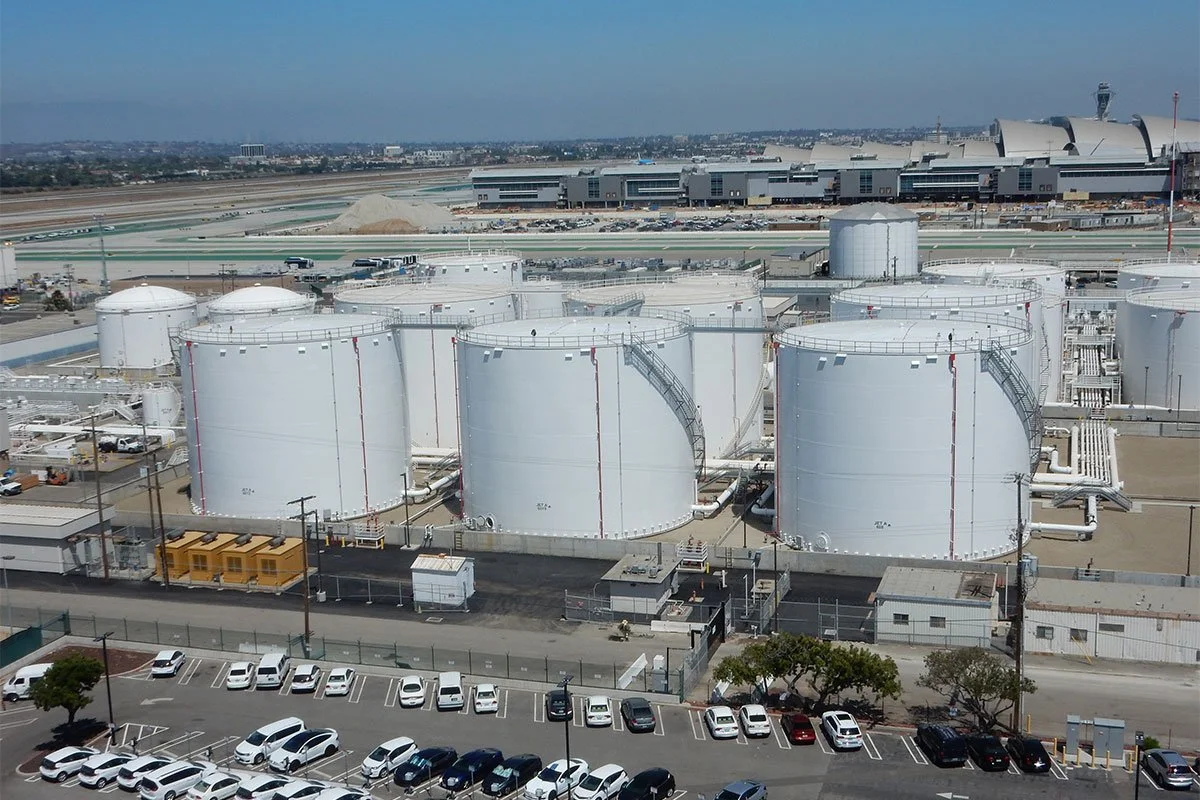
California Exposure
Despite the USA being able to meet its needs, the state of California has signalled potential disruption based on its reliance on imports after curtailing refining capacity.
6. What This Means for Businesses, Airlines & Travelers – Practical Implications and Strategic Outlook
Short term: Expect further fare increases, fuel surcharges and selective cancellations on high-volume routes as airlines pass on costs and manage capacity. Medium term: Governments will prioritise essential flights (cargo, military, emergency medical); leisure and non-essential capacity will be trimmed first. Longer term: The crisis is accelerating debate on strategic fuel reserves, the retention of domestic refining capacity, and a more measured pace for the energy transition.
Boston Warwick view: The situation remains manageable into late April but is tightening faster than the March consensus across multiple continents. Proactive demand management, diversified supply contracts, detailed scenario planning and corporate travel policy reviews will separate winners from losers. We continue to monitor tanker flows, government notices and airport allocations on a daily basis.
We will publish further updates as new data emerges. For clients and partners requiring detailed scenario modelling, custom country risk assessments, corporate travel policy reviews or supply-chain contingency planning, please contact our energy advisory team directly via the website.
Boston Warwick – Independent Energy Market Intelligence
Sources and Data Disclaimer
All information, analysis, figures, estimates, timelines, and commentary contained in this Special Report are derived exclusively from publicly available sources as of 5 April 2026. No proprietary, confidential, or non-public data has been used or referenced.
Key public sources include (but are not limited to):
- Argus Media, Rystad Energy, S&P Global Commodity Insights, Reuters, Bloomberg, Financial Times
- International Energy Agency (IEA) emergency stock releases and market commentary
- Kpler and Vortexa – real-time tanker tracking, in-transit cargo estimates and ARA/Asian hub inventory reports
- Official government and regulatory statements: EU Energy Commissioner, UK Department for Energy Security & Net Zero, Italy airport notices, Pakistan Airports Authority NOTAMs, Philippines Presidential Office, Australian and New Zealand government briefings, Japanese Ministry of Economy, Trade and Industry
- Public airline disclosures, CEO statements and regulatory filings (Ryanair, Lufthansa Group, EasyJet, Wizz Air, SAS, British Airways/IAG, Air France-KLM, Iberia, Qantas, Singapore Airlines, Cathay Pacific, Philippine Airlines, Cebu Pacific, Pakistan International Airlines, IndiGo, ANA and JAL)
- Refining and supply updates from Chevron (California), Valero, Phillips 66 and Dangote Refinery
- International Air Transport Association (IATA), Airports Council International Europe (ACI EUROPE) and EUROCONTROL aviation traffic and network data
Any forward-looking estimates (e.g. days-to-crisis timelines, demand impact scenarios, stockpile cover periods and capacity-cut projections) represent Boston Warwick’s reasoned, conservative interpretations based solely on the above public data, historical patterns from comparable disruptions, and standard industry benchmarks (such as IEA 90-day net-import rules). These are not forecasts or guarantees and are subject to rapid change based on evolving geopolitical, market, or operational developments.
Boston Warwick makes no representations or warranties, express or implied, as to the accuracy, completeness, or timeliness of the information provided, which is intended for general informational and discussion purposes only and should not be relied upon as the sole basis for commercial, operational, or investment decisions. Clients are encouraged to conduct their own independent verification and consult specialist advisors as appropriate.
Specific Sources Referenced
- International Energy Agency (IEA) – Emergency oil stock release updates and Oil Market Report – April 2026: https://www.iea.org/reports/oil-market-report-april-2026
- Argus Media – European and Asian Jet Fuel Market Updates, April 2026: https://www.argusmedia.com/en/news-and-insights/latest-market-news
- Rystad Energy – Supply Risk Analysis and Refinery Capacity Reports, April 2026: https://www.rystadenergy.com
- S&P Global Commodity Insights – Jet Fuel Price and Supply Analysis, April 2026: https://www.spglobal.com/commodityinsights/en
- Kpler – Global Tanker Tracking and In-Transit Volumes Report to 4 April 2026: https://www.kpler.com/blog
- Vortexa – Global Tanker Tracking Analysis, April 2026: https://www.vortexa.com/insights
- Official NOTAMs and government briefings (Pakistan Airports Authority, Philippines Presidential Office, EU Member States, UK, Australia, New Zealand, Japan) – published via respective government portals and NOTAM systems, April 2026
- Public airline press releases and investor statements, April 2026 (Ryanair, Lufthansa Group, EasyJet, Wizz Air, SAS, IAG, Air France-KLM, Qantas, Singapore Airlines, Cathay Pacific, Philippine Airlines, Cebu Pacific, PIA, IndiGo, ANA & JAL)