
European Cargo Enters Administration as A340-600 Model Comes Under Pressure
European Cargo Limited, the UK’s only operator of Airbus A340-600 freighters, entered administration on 3 June 2026. Joint administrators from Teneo Financial Advisory were appointed after operations ceased around 19 May. The collapse leaves One Air as the United Kingdom’s sole significant independent widebody cargo airline.
What makes the case noteworthy is not simply the administration itself, but what it reveals about the current economics of specialised air cargo operations. European Cargo had built a narrow but coherent model around regional UK gateways and direct long-haul flights serving Chinese e-commerce flows. For a period after the pandemic it worked. In the harsher conditions of 2025 and 2026 it did not. The episode offers a clear illustration of how quickly thin margins can disappear when fuel costs stay elevated, customer power is strong, and more efficient capacity returns to the market.
Key Takeaways
- European Cargo was the world’s only dedicated A340-600 freighter operator.
- The model was heavily exposed to price-sensitive Chinese e-commerce shippers on one-way routes.
- High fuel burn from the four-engine A340-600 became unsustainable once the post-pandemic boom ended.
- One Air is now the dominant UK independent widebody cargo operator.
- The case highlights the risks of niche, higher-cost freighter models in a normalising market.
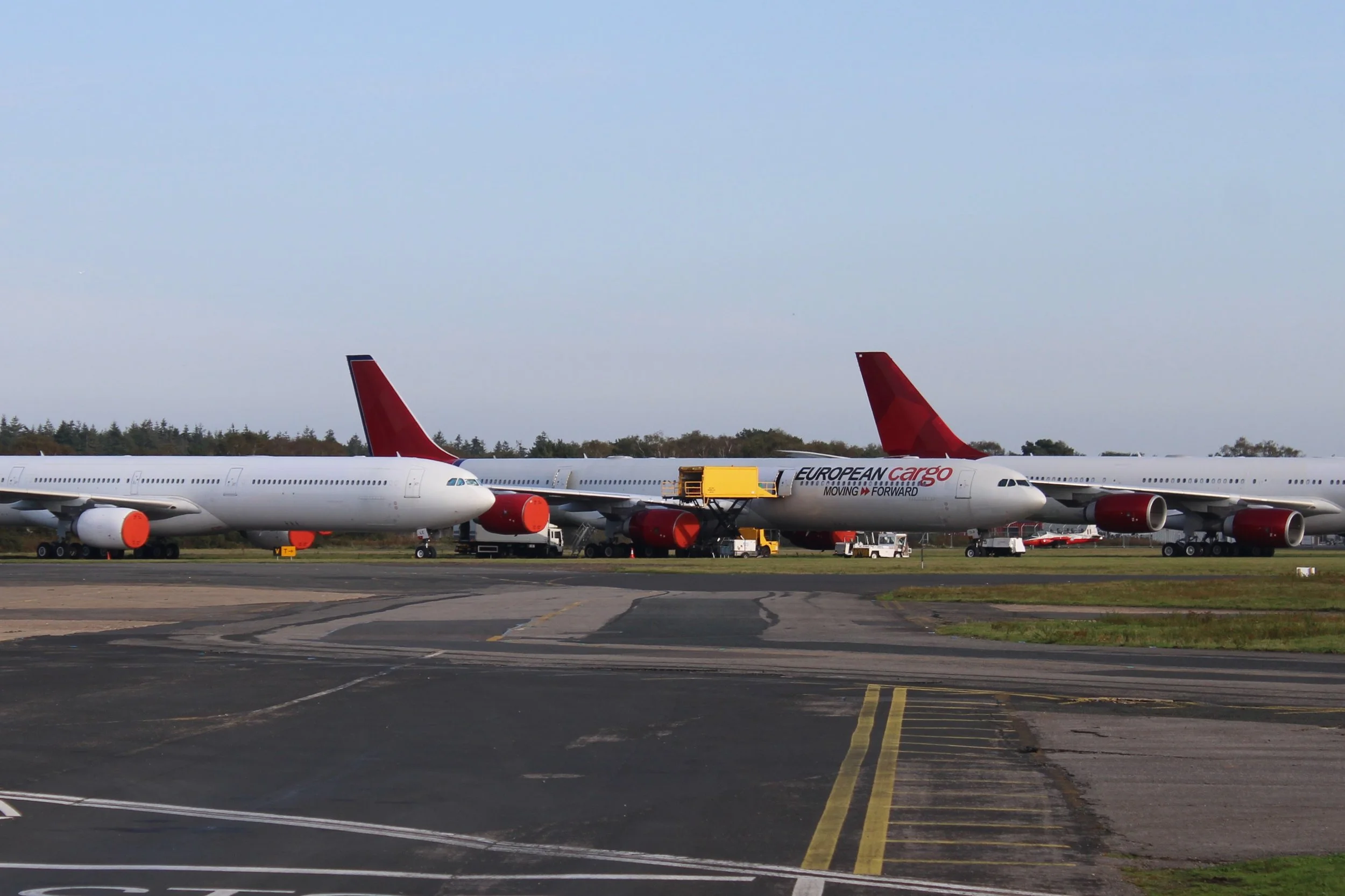
Image: European Cargo A340-600 freighters at Bournemouth International Airport | European Cargo
From Pandemic Lifeline to China E-Commerce Specialist
European Cargo’s origins lie in the early months of the pandemic. When the UK government needed urgent capacity to bring in personal protective equipment and test kits, the wider European Aviation group responded by repurposing several Airbus A340-600 passenger aircraft as temporary freighters. Some of these aircraft carried special NHS-themed liveries, a visible reminder of how unusual the operation was from the beginning.
Most passenger-to-freighter conversion programmes have focused on the Boeing 747, 767 or Airbus A330 families. The decision to pursue a permanent freighter conversion on the A340-600 was less common. The aircraft offered genuine long-range capability and exemption from ETOPS restrictions because of its four engines. This made direct routings over remote areas operationally simpler. It also carried a useful combination of payload and volume — roughly 76 tonnes and 440 cubic metres — that suited high-volume e-commerce traffic.
By 2022 and 2023 the company had moved from ad-hoc pandemic charters to a more regular model. It developed scheduled and regular charter services from Bournemouth to key Chinese cities, including Chengdu and Chongqing, later adding links involving Ürümqi. Chinese e-commerce platforms and sellers valued the combination of direct long-haul flights and a less congested regional airport. Goods could reach UK warehouses faster than through London Heathrow or even East Midlands. For a time the model delivered strong load factors on the inbound leg and established Bournemouth as a credible secondary gateway for this type of traffic.
The operation was never large by global cargo standards, but it was distinctive. It showed that a small UK carrier could carve out a viable niche in long-haul dedicated freighter flying if it focused tightly on one customer segment and one type of traffic.
The Ownership Change and Rising Cost Base
In 2022 US logistics broker Priority 1 took a significant stake in the business to support the shift to permanent freighter operations. By April 2025 the company had completed a full buyout, becoming 100% owner. The transaction was supported by a $230 million secured financing facility priced at 12.65%. Companies House records also show changes in persons with significant control in late 2024.
The combination of this capital structure and the underlying operating economics proved difficult once conditions deteriorated. Air cargo is a high fixed-cost, cyclical business. When yields come under pressure, the ability to service expensive debt quickly becomes constrained. European Cargo was not unique in facing this tension, but the timing of the leveraged ownership change left it with limited financial flexibility when fuel prices remained elevated and competition intensified.
Stay ahead with Boston Warwick Aviation Insights
Weekly briefings with deep fleet economics, operator watchlists, fuel risk analysis and early-warning signals.
Subscribe to the NewsletterThe Fleet: An Unusual Second Life for the A340-600
The A340-600 fleet itself was always going to be a point of discussion. These were not standard freighters. Most cargo operators have moved toward twin-engine aircraft for better fuel efficiency and lower maintenance costs on many routes. The A340-600’s four-engine layout carried a fuel-burn penalty that only made sense if the aircraft could command premium yields or operate on routes where its range and ETOPS-exempt capability delivered clear commercial advantages.
In practice the aircraft performed well on the long, direct China–UK sectors European Cargo flew. The volumetric capacity was attractive for e-commerce shippers moving lighter, bulkier goods. However, the same characteristics that made the aircraft interesting on paper became liabilities once the market normalised. Fuel represented a larger share of total operating cost than on more modern freighters, and the aircraft offered less operational flexibility for mixed cargo or ad-hoc charter work.
In administration the fleet’s future will be determined by the joint administrators. The Rolls-Royce Trent 500 engines are likely to attract the most interest from engine lessors and traders. The airframes themselves, as converted A340-600 freighters, have a narrower potential buyer pool. Part-out activity or sale to specialist or opportunistic operators remains the most probable outcome for several aircraft. Long-term storage while the market is tested is also realistic. The episode underscores how quickly residual values can come under pressure when a small number of aircraft of a less common type enter distress.

Image: European Cargo A340 undergoing cargo handling at Bournemouth | Bournemouth Airport
Why the Model Ultimately Failed
Several structural factors came together.
The post-pandemic air cargo boom of 2020–2022 was always going to normalise. Passenger airlines restored belly capacity on long-haul routes, new freighter deliveries continued, and overall rate levels came under pressure. European Cargo’s model was built during the exceptional period and proved sensitive to the return of more competitive conditions.
Fuel prices remained elevated through 2025 and into 2026. For any operator running older quad-jet aircraft, this created a significant cost disadvantage relative to more efficient twin-engine freighters or even well-utilised 747-400Fs. The ability to pass these costs on to customers was limited.
Chinese e-commerce buyers exert considerable negotiating power. Many platforms and individual sellers operate on thin margins themselves and treat air freight as a commodity where the lowest total landed cost wins. They are often willing to switch carriers, airports or even modes of transport if a better rate is available. Fuel surcharges and premium pricing for dedicated long-haul capacity are frequently resisted. In a market with available belly space and competing freighter operators, this buyer behaviour compresses yields quickly for smaller dedicated carriers.
Traffic was heavily imbalanced — strong inbound loads from China but weak returns. Classic air cargo economics penalise operators that cannot fill aircraft in both directions or absorb the cost of positioning. The A340-600’s higher fuel burn made empty or low-yield sectors particularly painful.
Finally, the competitive set changed. More efficient dedicated freighters and recovering passenger belly capacity both targeted similar lanes. European Cargo’s niche — regional UK gateway plus converted A340-600s — offered differentiation during the boom. Once yields normalised, the differentiation was not enough to offset the cost structure.
The combination of high fuel sensitivity, concentrated and price-sensitive demand, structural imbalance, and returning competition from more efficient capacity proved decisive. Many of these pressures are not unique to European Cargo. They affect any operator running higher-cost aircraft on thin-margin lanes with powerful customers.
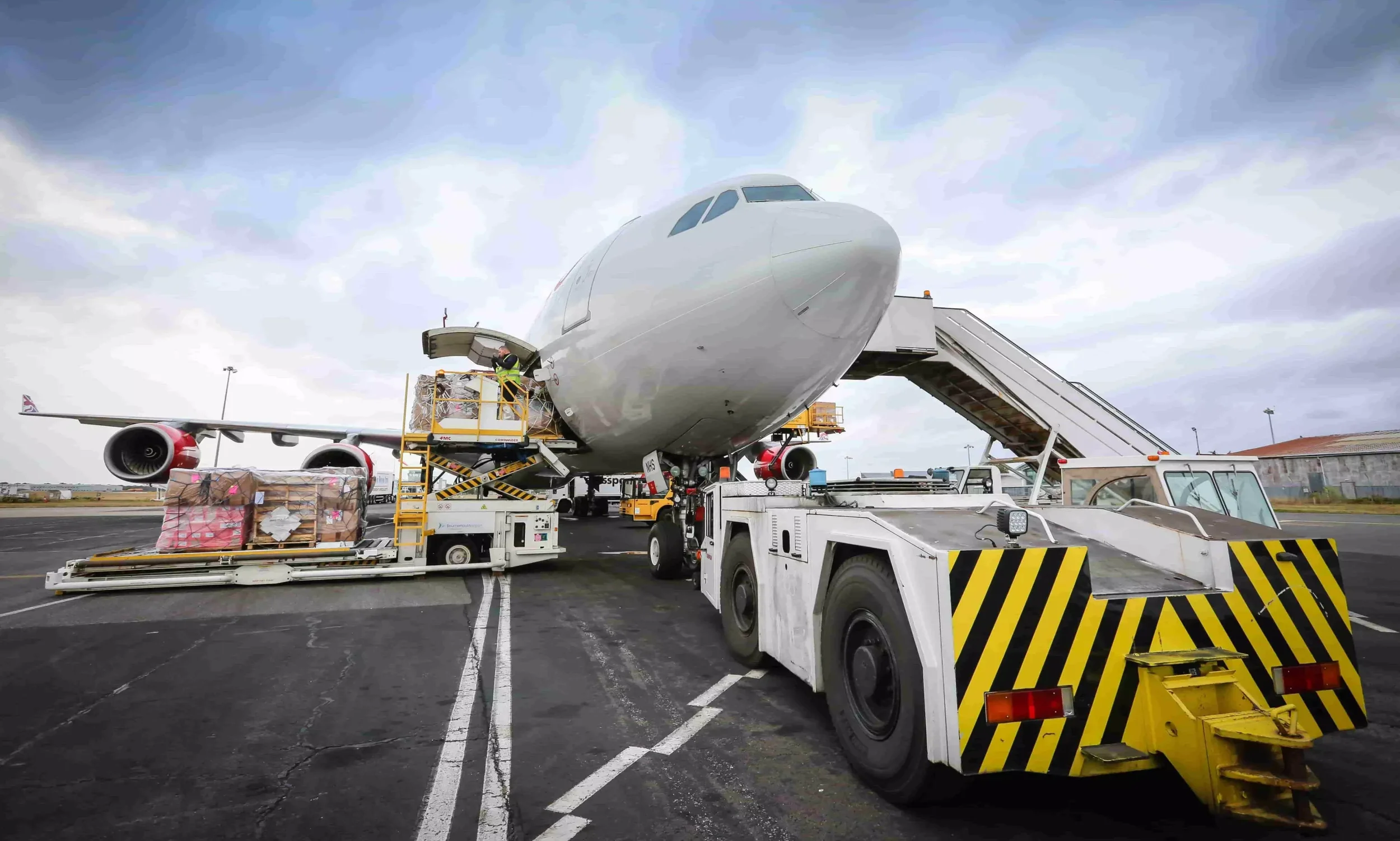
Image: European Cargo A340-600 freighter being loaded | European Cargo
One Air: The Dominant UK Independent Widebody Cargo Operator
With European Cargo’s exit, One Air has become the clear dominant independent UK widebody cargo operator. The airline has built a credible and growing position through a deliberate focus on the Boeing 747-400 freighter platform, later supplemented by 777Fs. This choice of aircraft is not accidental. The 747-400F remains one of the most versatile and economically resilient widebody freighters still in widespread service, with deep global parts support, mature maintenance programmes, and strong residual values.
One Air has pursued a hybrid commercial strategy that combines scheduled Asia–Europe services with a meaningful charter and ad-hoc business. This mix gives the airline greater flexibility than pure scheduled operators or pure ACMI providers. When scheduled yields soften, the charter book can help maintain utilisation. When spot demand appears, the airline can respond quickly without being locked into long-term contracts.

Image: One Air Boeing 747-400 freighter | One Air
This approach stands in contrast to previous UK widebody cargo models. Global Supply Systems (GSS), which operated 747 freighters on behalf of British Airways World Cargo, was heavily dependent on a single customer. When BA World Cargo decided to exit dedicated freighter operations, GSS effectively lost its reason for existence and ceased flying. The model was essentially a wet-lease provider tied to one major client’s strategic direction. One Air’s more diversified revenue base and independent commercial approach reduce this single-customer concentration risk.
Another relevant comparison is Magma Aviation. Magma has built a successful UK cargo operation focused primarily on ACMI (wet-lease) flying with a mixed fleet that includes both 737s and 747s. While Magma has demonstrated resilience and operational competence, its model is more heavily weighted toward contract flying for other airlines and forwarders. One Air’s combination of its own scheduled network plus flexible charter capacity gives it a different risk and reward profile — one that appears better suited to the current environment where shippers and forwarders value both reliability and the ability to move quickly on spot opportunities.
One Air has also been methodical in growing its fleet and traffic rights. It has added aircraft progressively rather than expanding aggressively, and it has secured the necessary regulatory approvals to operate into key markets. This measured approach has allowed the airline to build operational experience and commercial relationships without overextending during periods of market volatility.
The departure of European Cargo further strengthens One Air’s position. Shippers and forwarders who previously used European Cargo for certain China–UK flows now have fewer domestic options. While foreign carriers and the large integrators will pick up some of that volume, One Air is well placed to capture a meaningful share because it is a UK-registered operator with the right aircraft and the operational flexibility to serve both scheduled and ad-hoc requirements.
Looking ahead, One Air’s main challenge will be maintaining discipline as the market leader. Concentration brings opportunity but also scrutiny. Customers will expect competitive pricing and high reliability. Any significant softening in yields or utilisation would now have a more visible impact on the overall UK independent cargo offering. For now, however, One Air appears structurally better positioned than either its most recent competitor or the previous generation of UK widebody cargo operators.
What This Means for UK Cargo Capacity
The loss of European Cargo reduces options for shippers moving time-sensitive or high-volume goods on certain China–UK lanes, particularly those that previously valued the regional airport model. Bournemouth’s cargo development has suffered a clear setback. The planned expansion at Teesside has been stopped before it could begin. Capacity previously supplied by a UK-registered operator will need to be replaced by foreign carriers, larger integrators, or additional trucking to major hubs.
More broadly, the case illustrates the narrow path available to specialised, higher-cost freighter operations once exceptional demand conditions end. Regional airports that hoped to build meaningful long-haul cargo roles now face a more difficult environment. The UK long-haul cargo market continues to consolidate around operators with scale, more efficient aircraft, and diversified revenue streams.
At Boston Warwick we track these developments closely as they unfold across the European cargo sector. Our clients receive regular, detailed analysis of operator financial health, fleet economics and emerging risks.
Confidential discussions available for airlines, investors, banks and airports.
Frequently Asked Questions
Why did European Cargo go into administration?
A combination of high fuel costs on the fuel-intensive A340-600, price pressure from Chinese e-commerce customers, one-way traffic economics, and the end of the post-pandemic cargo boom made the business unsustainable.
What will happen to the European Cargo A340-600 fleet?
The Rolls-Royce Trent 500 engines are expected to be the most valuable assets. The converted airframes have a limited secondary market and are likely to be parted out or sold to specialist buyers.
Who is now the main UK widebody cargo operator?
One Air is now the dominant independent UK widebody cargo airline, operating Boeing 747-400 freighters and 777Fs.
What does this mean for air cargo from China to the UK?
Shippers may see reduced choice on some regional routes and increased reliance on major hubs or foreign carriers in the short term.
SOURCES
- Teneo Financial Advisory administrators’ notice, European Cargo Limited, 3 June 2026.
- Companies House filings – European Cargo Limited (company number 13097241).
- Airfinance Global reporting on Priority 1 acquisition and financing.
- Airways Magazine and Bournemouth Echo coverage, June 2026.
- Flight tracking data and industry analysis of A340-600 operations.